

Feeding to Improve Fertility
12th January 2026
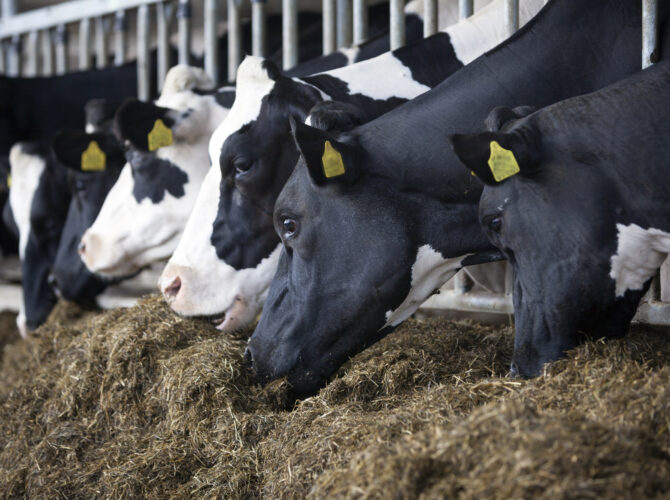
As many dairy farmers prepare for what may be a challenging number of months, it is essential to ensure that feeding programmes are designed not only to maximise milk production efficiency, but also to support strong and sustainable reproductive performance.
The Transition Period
Successful herd fertility begins well before the first service. The transition period three weeks before and after calving has a significant influence on a cow’s ability to resume cyclicity, conceive at first service and maintain a pregnancy. Poor nutritional management during this critical window can lead to metabolic disorders, delayed return to oestrus, and reduced conception rates.
Ensuring cows calve down at the correct body condition score and that concentrate feeding is increased in a controlled and timely manner post-calving is key to minimising metabolic stress and setting cows up for reproductive success.
Energy Status
A cow’s energy status is one of the most important drivers of reproductive performance. Following calving, cows inevitably enter a period of negative energy balance, where energy demand exceeds intake. Prolonged negative energy balance delays the resumption of normal ovarian activity, leading to lower submission rates and reduced overall pregnancy rates.
The primary objective is to minimise the depth and duration of this energy deficit and support cows in returning to positive energy balance as quickly as possible.
While some farmers may be keen to move fully onto a feed-to-yield system from around day 21 post-calving, doing so too early can result in concentrates and therefore energy, being withdrawn during a period when cows require them most. It is advisable to maintain concentrates at a minimum level until approximately day 80–100, by which point the majority of cows should be confirmed in calf.
When transitioning to feed-to-yield, the first step is to accurately calculate the number of litres being supported by the basal diet. This requires reliable forage analysis, accurate estimates of forage intake and consideration of any additional concentrates being fed. If silage requires retesting, or if support is needed to develop feed tables, your local Fane Valley Feeds Ruminant Feed Advisor can provide assistance.
Pre-Breeding Scanning
Pre-breeding scanning or post-natal checks are valuable tools for identifying potential reproductive issues before cows are due to be served. Scanning at this stage can help diagnose uterine infections, identify cystic cows or highlight animals that are slow to resume cycling.
This is also an important opportunity to assess body condition. Consistently high numbers of thin cows at this stage may indicate inadequate concentrate allocation to fresh cows. Early identification of such issues allows for targeted interventions, improving conception rates and helping to reduce overall calving interval.
Monitoring Performance
Monitoring key fertility performance indicators is essential for identifying opportunities for improvement. Within each 21-day cycle, farmers should closely track submission rates (the proportion of eligible cows served), conception rates (the proportion of services resulting in pregnancy) and pregnancy rates (the proportion of eligible cows that become pregnant).
Strong pregnancy rates are the outcome of several factors working together, including nutrition, heat detection, cow health and breeding management. By implementing a balanced and well-managed feeding strategy, Fane Valley Feeds has demonstrated on-farm pregnancy rates exceeding 30%, compared to the UK average of approximately 16%.
For further information or support on improving dairy herd fertility, please contact Nathan McClure on 077 0807 7467 or speak with your local Fane Valley Feeds Ruminant Feed Advisor.