

Spring Grazing: A Practical Approach
3rd April 2026
Spring turnout can offer one of the largest opportunities to improve margins on some dairy farms, if it’s managed correctly. Grass is the cheapest feed available, yet its full benefit is often not realised due to poor transition management when cows are first turned out.
Early grazing sets the foundation for the entire season. The goal isn’t just about getting cows out – it’s about controlling grass quality to set up swards for strong second and third rotations and maintaining animal performance by protecting rumen health. The aim is to graze lighter covers (around 2,600–2,800 kg DM/ha) and achieve good cleanouts by grazing paddocks well to promote quality regrowth. The first grazing rotation length should be longer to coincide.
Figure 1 below also demonstrates the importance of pre grazing covers to maximise the intake potential. 3000kg pre grazing cover ensured the maximum dry matter intake and as swards got stronger this declined drastically. Managing this by removing excess grass can help ensure your intakes are not compromised.
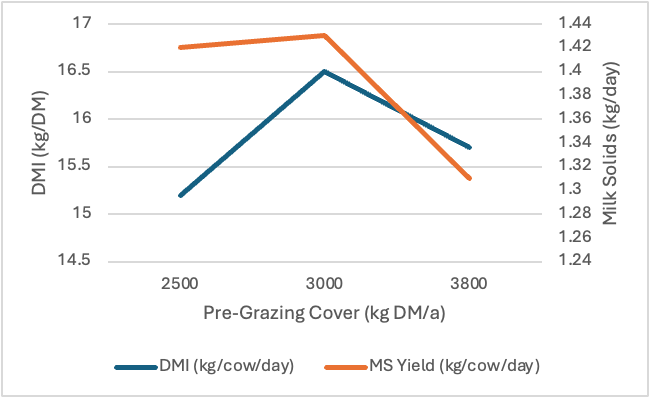
Figure 1: Effect of pre-grazing herbage mass on grass dry matter intake and milk production of dairy cows (Tunon et al., 2011)
One of the most common mistakes is underestimating grass intake. Fresh spring grass can be as low as 10–13% dry matter (DM) in wet conditions, meaning cows must physically eat far more to meet their energy needs. Even as weather improves with mixed sunshine/showers grass DM can be as low as 17%. If this is overlooked, milk yield, body condition and fertility can all suffer. Supplementation with silage as a buffer or concentrates is necessary to bridge this gap, especially for cows yielding over 35 litres.
Rumen health is another critical factor. Spring grass is high in sugars and protein but low in digestible fibre, this can increase the risk of ruminal acidosis and milk fat depression if changes to the diet are made suddenly. A gradual transition is essential, so start with a few hours at grass and build up over time while allowing access to buffer feeds so to allow the rumen microbiota to adapt. Using buffers or yeast products are crucial to help stabilise rumen function.
Cow type and stage of lactation also play a role in grazing management. Mid- to late-lactation cows (<30l/day and pregnant) adapt well to early grazing, while freshly calved, high-yielding cows are more vulnerable to energy deficits. Managing these groups separately can prevent performance losses and is strongly advised if practical.
Concentrate feeding should complement grass and not be removed too quickly. A balanced ration with adequate fibre and minerals, particularly magnesium, is vital during this period. Once/if cows transition to full-time grazing, protein levels in concentrates can be reduced depending on grass quality and weather conditions.
A successful spring grazing comes down to a gradual transition, careful intake management and appropriate supplementation to maximise milk production and maintain cow health during spring turnout.
To ensure your cows transition smoothly to grass with the correct diet, please contact your local Fane Valley Sales Advisor or call 028 8224 3221.