

The Invisible Threat: Mycotoxins Effect on the Northern Irish Dairy Industry
8th September 2026
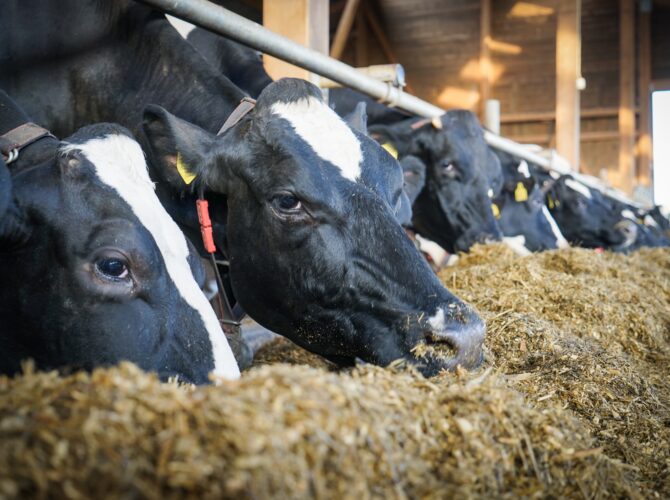
Mycotoxins are toxic secondary metabolites produced by moulds and fungi. They can contaminate maize, wheat, barley and other grains, as well as conserved forages, particularly grass silage, wholecrop and maize silage.
Multiple mycotoxins can occur together, meaning animals may be exposed to several toxins simultaneously, potentially increasing the overall challenge. They are typically produced when mould is stressed. They are invisible, odourless and colourless, making them an invisible threat to any dairy enterprises.
The effects of mycotoxins on farm can be varied and often non specific. Potential signs include reduced dry matter intake, lower milk production and poorer reproductive performance. Mycotoxins can also disrupt rumen function, gut integrity and immune response, potentially reducing nutrient utilisation and overall animal performance.
Table 1: Five mycotoxin/metabolite groups of relevance in NI forages:
| Mycotoxin Group | Fungal Association | Source | Potential effects in ruminants |
| Penicillic acid | Penicillium | Grass silages | Impaired immune function & reduced performance |
| Fumonisins | Fusarium | Grass silages | Potential hepatic effects, although ruminants generally tolerate |
| Emerging mycotoxins | Fusarium | Grass silages | Poor cellular function, gut/rumen health |
| DON (deoxynivalenol) | Fusarium | Whole crop maize | Reduced intake, altered gut function |
| Zearalenone (ZEN) | Fusarium | Whole crop maize | Reproductive disruption, altered oestrus |
Recent Fane Valley Feeds forage surveys continue to highlight Penicillium-associated mycotoxins as a significant challenge. In last year’s survey, 67% of samples were identified as having a high Penicillium mycotoxin burden. A broader range of mycotoxins was also detected than in previous years, reinforcing the importance of considering the total mycotoxin challenge rather than focusing on individual toxins in isolation.
Fane Valley Feeds takes a proactive and targeted approach to mycotoxin risk management, starting before grain enters our mills. Raw materials are screened to assess potential mycotoxin burden, helping us identify risk and source grain with the lowest practical level of mycotoxin challenge.
This approach continues on farm through forage sampling and practical support from ensiling through to feed out. This includes reviewing clamp compaction and sealing, monitoring forage quality and mycotoxin risk and assessing clamp management at feed out. Where a risk is identified appropriate mycotoxin binder inclusion rates can be recommended and implemented quickly ranging from preventative to treatment rates depending on the level and type of challenge. This allows Fane Valley Feeds to take a targeted approach to each individual farm.
Fane Valley Feeds has also seen successful examples of mycotoxin mitigation on farm, with individual herds experiencing milk yield improvements of up to 2.1 litres/cow/day following intervention where a high forage mycotoxin burden had been identified.
As we move into the winter feeding period, being proactive around mycotoxin risk is increasingly important. If you are seeing heating, spoilage or visible mould within the clamp, or unexplained changes in intake, milk production, fertility or general herd health and performance, mycotoxin risk may be one area worth investigating.
Fane Valley Feeds regularly carries out forage analysis to help identify and quantify potential risk. Contact your local Fane Valley Feeds adviser to discuss how we can help.